Case Study — Rebalancing vs. BUY & HOLD
Written By Ehsaan XP
Last updated 7 months ago
In this chapter, we'll explore a real-world case study using our DeFi Leaders basket to compare the performance of the Rebalancing strategy against the BUY & HOLD strategy. This analysis demonstrates how rebalancing can potentially outperform a buy-and-hold approach under certain market conditions, but also acknowledges situations where BUY & HOLD may excel.
Scenario Setup
DeFi Leaders Basket Overview
The DeFi Leaders basket is designed to capture the leading assets in the decentralized finance (DeFi) sector. This basket includes a selection of cryptocurrencies that are prominent in the DeFi space, offering exposure to this innovative and rapidly evolving sector.
Assets and Initial Allocations
The initial allocations for the basket are as follows:
Total Investment Amount: $10,000
Asset Allocation Strategies
Basket 1: BUY & HOLD (No rebalancing)
Basket 2: Rebalancing Enabled (Automated monthly rebalancing)
Time Period
Analysis Duration: From September 1, 2023, to October 2, 2024 (approximately one year)
Performance Over Time
We'll compare how each strategy performed over the one-year period, focusing on the total portfolio value at the end of the period and comparing returns to the benchmark.
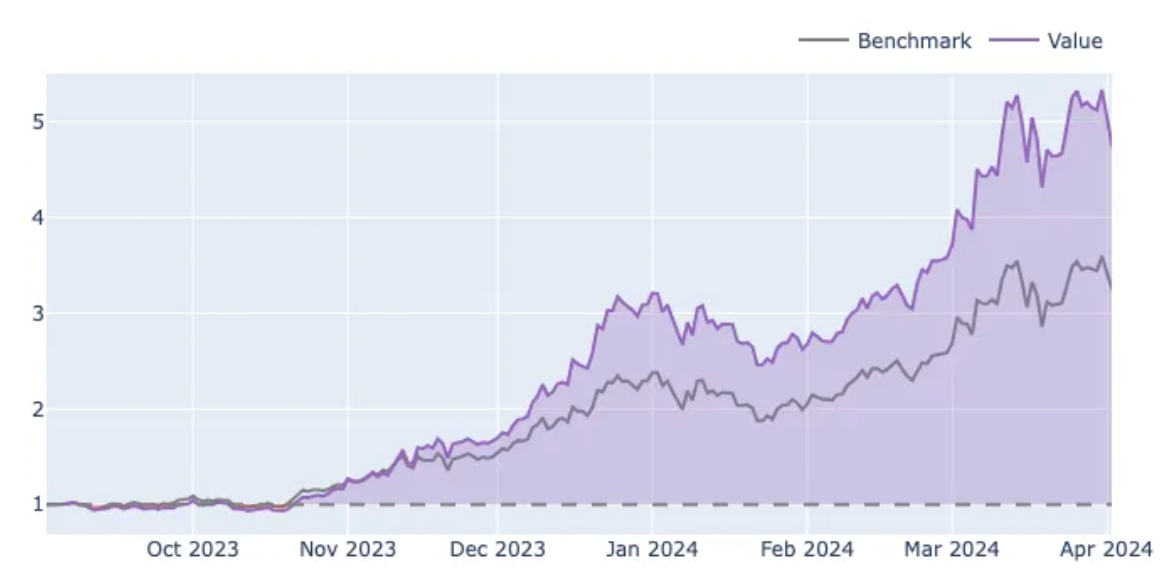
Note: The benchmark return represents the performance of the BUY & HOLD strategy in this context.
End-of-Period Portfolio Values
After simulating both strategies over the specified time period, we observed the following results:
BUY & HOLD Basket:
End Value: $19,527
Total Return: +95.27%
Rebalanced Basket:
End Value: $30,508
Total Return: +205.08%
Portfolio Growth Comparison
The Rebalanced Basket significantly outperformed the BUY & HOLD Basket over the period. While the BUY & HOLD strategy nearly doubled the initial capital, the Rebalancing strategy more than tripled it.
Outcome Analysis
Understanding Why Rebalancing Outperformed
Capitalizing on Market Volatility
Rebalancing Strategy:
Regularly adjusted the portfolio to maintain target allocations.
Bought more of the assets that had decreased in price and sold some of those that had increased.
This systematic approach allowed the portfolio to capitalize on price fluctuations in the DeFi market.
BUY & HOLD Strategy:
Did not adjust holdings throughout the period.
Missed opportunities to accumulate undervalued assets or take profits from overvalued ones.
Maintaining Optimal Asset Allocation
Rebalancing:
Kept the portfolio aligned with the desired asset allocation.
Ensured diversification benefits were maintained throughout the period.
BUY & HOLD:
Asset allocations drifted over time due to differing asset performances.
Resulted in overexposure to certain assets and underexposure to others, which could increase risk.
Enhanced Risk-Adjusted Returns
The Rebalancing strategy not only delivered higher returns but did so by systematically managing risk through diversification and allocation maintenance.
When Rebalancing May Underperform
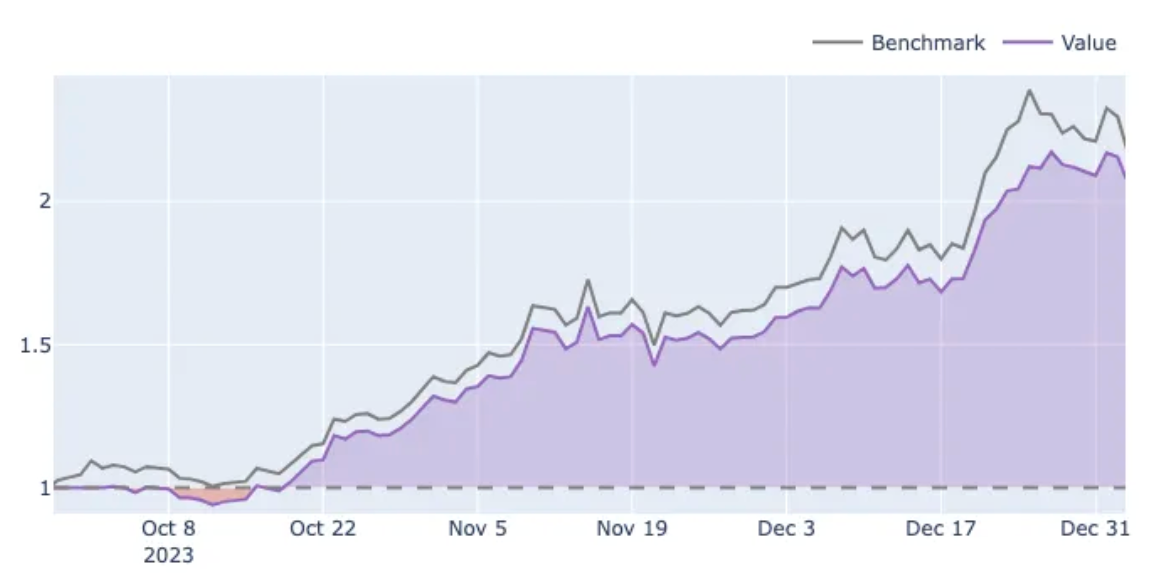
While the above case study shows rebalancing outperforming BUY & HOLD, it's important to acknowledge that this is not always the case. In highly trending markets, especially strong bull markets, the BUY & HOLD strategy can outperform rebalancing.
Understanding Scenarios Where BUY & HOLD Excels
Strong Upward Trends
BUY & HOLD Strategy:
In markets where asset prices are consistently rising, holding onto assets without selling allows you to fully capture the gains.
Selling high-performing assets to rebalance may limit potential future gains if those assets continue to rise.
Rebalancing Strategy:
Regularly selling portions of appreciating assets to buy underperforming ones can result in lower overall returns during a strong upward trend.
Allocation Drift Can Amplify Gains
BUY & HOLD:
As high-performing assets grow, they take up a larger portion of the portfolio, potentially amplifying gains if the trend continues.
Rebalancing:
By keeping allocations fixed, rebalancing may miss out on the exponential growth of top-performing assets.
Risk Considerations
Higher Risk with BUY & HOLD:
The increased exposure to a few high-performing assets can significantly boost returns but also increases the portfolio's risk.
If the market reverses, the portfolio may suffer larger losses due to overconcentration.
Rebalancing Manages Risk:
By maintaining target allocations, rebalancing reduces overexposure to any single asset.
This can protect the portfolio from sharp declines if a high-flying asset experiences a downturn.
Key Takeaways
Strategy Effectiveness Depends on Market Conditions
Rebalancing tends to perform better in volatile or sideways markets where asset prices fluctuate.
BUY & HOLD may outperform in strong trending markets, particularly during sustained bull runs.
Balancing Return and Risk
While BUY & HOLD can offer higher returns in certain conditions, it comes with higher risk due to allocation drift.
Rebalancing offers a more disciplined approach to risk management, potentially sacrificing some upside for greater stability.
Investor Goals and Risk Tolerance Matter
Investors seeking maximum growth and willing to accept higher risk may prefer BUY & HOLD during bullish markets.
Those prioritizing risk management and consistent exposure may opt for rebalancing, even if it means potentially lower returns in trending markets.
Conclusion
This chapter highlights that while rebalancing can enhance returns and manage risk effectively, it is not guaranteed to outperform the BUY & HOLD strategy in all market conditions. Understanding the dynamics of each strategy and how they align with your investment goals and risk tolerance is crucial.
Final Thoughts
No One-Size-Fits-All Approach:
The choice between rebalancing and BUY & HOLD should be based on individual preferences and market outlook.
Adaptability:
Traders can adjust their strategies based on changing market conditions, potentially combining elements of both approaches.
Leveraging Platform Flexibility:
Our platform allows you to implement and adjust these strategies seamlessly, providing the tools needed to navigate different market environments.
Disclaimer: Trading involves significant financial risk and can result in substantial losses. Past performance does not guarantee future results. SageMaster does not provide financial advice. Users should ensure compliance with local regulations.